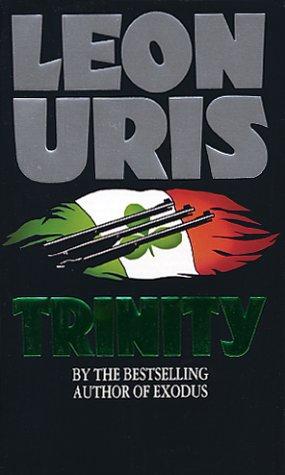
 Just a few days ago, I finished reading a book called Trinity written by the American author Leon Uris. Although it can be because a great hiberniafilia or it also can be because something else, this book is much shorter than it seems. It is an historical novel that mixes fiction and true events that befall in Ireland, mainly in Ulster.
The story starts in 1885 and finishes with the Easter Rising in 1916. The nine hundred pages allow the reader to gain a basic, if not a wide idea about the Irish history of the last three centuries. It goes through the never-ending fight between Irish (Catholics) and British (protestants); starting with the battle of Boyne in 1690, where a mixture of English, Scottish and Dutch troops led by William III of Orange defeated the Irish troops which were led by James II, and following with the numerous Irish risings that came after.
The novel also illustrates, briefly one of the toughest periods in Irish history. The so-called Great Famine (1845-1852), caused by a potato disease, provoked the death of nearly 1 million people and the huge migration of people, running away from starvation and death towards the USA, Canada, Australia...However, it was not only the potato disease what crashed the Irish population, but also the British policy, the colonialism and the cruel way they were treated that did nothing but increased the number of casualties.
As previously said, the novel finishes in 1916, on the threshold of the Irish War of Independence. Yet, it is a good way of learning the contemporary Irish history and answering many questions. How is it called, Londonderry or Derry? What is Falls Road and what is Shankhill? Where are they? What is the Bogside? What does UVF stand for? Why on Earth do we have to stand every July, either on TV or live, those men in orange and black marching and beating their drums?
You might not be interested in the history but besides that, this book gives the opportunity to know something about the Celtic culture and some of its rituals, to see the working conditions of those days, to travel to those places you would like to be or you have already been so many times, to walk in Dublin, in Derry, in Belfast, to go to those small villages, to climb those green hills, to enter those pubs where you have taken so many pints (by the way, I see now why they drink so much!),...and probably the most important thing, to fantasize with the exciting adventures going on...
P.D. By the way, to those thinking suspiciously, I am not the owner of the publicing company

1 comentario:
No volveré a ser joven
Que la vida iba en serio
uno lo empieza a comprender más tarde
-como todos los jóvenes, yo vine
a llevarme la vida por delante.
Dejar huella quería
y marcharme entre aplausos
-envejecer, morir, eran tan sólo
las dimensiones del teatro.
Pero ha pasado el tiempo
y la verdad desagradable asoma:
envejecer, morir,
es el único argumento de la obra.
Jaime Gil de Biedma
"Poemas póstumos" 1968
Publicar un comentario